This ‘Understanding and Getting on with People Role Play’ is a fun and inclusive home or school activity for a group of KS1 or KS2 children. This role play helps children understand, discuss and learn:
- the importance of first impressions
- listening skills and empathy
- how conversations can make people feel and affect perceptions of themselves friendship-building
- the role of body language and confidence
- friendship-building
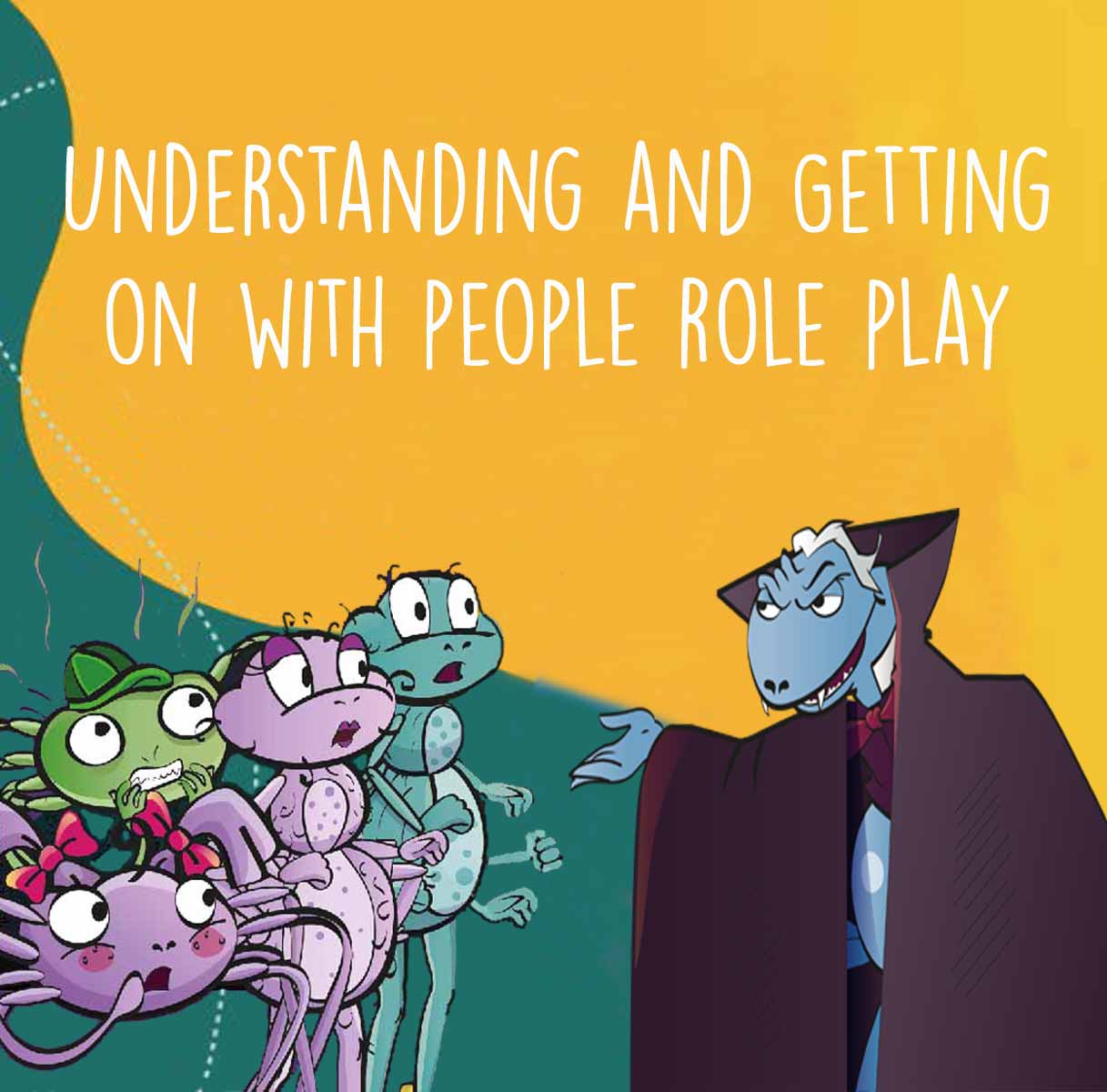
In Spid the Spider Meets Count Spidula, Spid and his friends are frightened of Count Spidula because he looks scary and lives in a spooky castle. But later, they discover there is much more to him than they first thought.
This story reminds us that:
- people are not always what they seem
- first impressions can sometimes be wrong
- kindness and understanding can build friendships
- asking questions helps us understand others better
- everyone has feelings, worries and hopes
🎭 Role Play Guidelines for Parents and Teachers
These role plays are designed to engage the entire group or class.
For each role-play you should first seek or nominate two volunteers for the role-plays, while the rest of the group or class are tasked to observe and make notes on what made communication easy or difficult, together with any lessons learned.
Then after each role-play, you can then facilitate discussion on:
- What made communication easy or difficult?
- Which person they felt most comfortable with and why?
- What helped build trust or friendship?
- How body language affected the conversation?
- What could they do differently?
Encourage everyone in the group to answer, and include everyone over the three role plays. Reassure them that everyone’s view is equally important, and valid.
🎭 Role Play 1: “The Shy Person”
Aim: To show how patience, kindness and gentle questions can help someone feel comfortable.
Person A Instructions
You are meeting someone new and want to get to know them kindly.
- Smile
- Speak gently
- Ask simple questions
- Be patient
- Try to include the other person
Suggested questions:
- What games do you like?
- What’s your favourite food?
- What do you enjoy doing at weekends?
- Tell me something about you I don’t know?
Person B Instructions
You act a little shy and nervous, perhaps you are new to the area.
- Avoid eye contact
- Speak very quietly
- Give very short answers
- Be unsure about shaking hands
- Shrug shoulders
- Take time before answering
Example answers:
- “Maybe.”
- “Football.”
- “I don’t know.”
- “A bit.”
Class Discussion Questions
- How did you perceive Person A and Person B?
- How did Person B seem to feel?
- What helped Person B (the shy person), engage with Person A?
- How can we help both people in real life?
🎭 Role Play 2: “The Self-Centred Conversation”
Aim: To explore how behaviour and body language affect relationships.
Person A Instructions
You are trying to have a normal friendly conversation.
Person B Instructions
You act:
- unsmiling
- boastful
- slightly bossy
- self-centred
- uninterested in others
You should:
- give a slightly too-hard handshake
- interrupt
- talk mostly about yourself
- avoid asking questions
- try to sound important
Example phrases:
- “I’m the best at football.”
- “Everyone says I’m brilliant.”
- “I already knew that.”
- “Anyway, enough about you…”
- “I’ve got much better things than that.”
Class Discussion Questions
- How did Person A and B make others feel?
- Did the conversation feel equal?
- What body language was unfriendly?
- Would you want to spend time with this person?
- What could Person B do differently?
- Is confidence the same as kindness?
🎭 Role Play 3: “Building a Friendship”
Aim: To show how good conversations help people connect and build trust.
Both People Instructions
You are meeting for the first time and both want to get to know each other.
You should:
- smile
- listen carefully
- ask questions
- show interest
- take turns speaking
- encourage each other
Suggested topics:
- hobbies
- pets
- favourite books
- holidays
- music
- sports
- dreams for the future
Useful phrases:
- “That sounds fun!”
- “Tell me more.”
- “I like that too.”
- “How did you learn that?”
- “What’s your favourite thing about it?”
- “How does that make you feel?”
Class Discussion Questions
- How did both people make you feel?
- Which conversation felt happiest?
- What helped build friendship?
- Did both people feel included?
- What good listening skills did you notice?
- Which person would you most like as a friend?
- What can we learn from this role-play?
⭐ Teacher / Class Reflection
Key Learning Points
People think differently about people and good relationships happen when people:
- listen carefully
- ask questions
- use their ears and voice in balance
- show kindness
- make others feel included
- avoid judging too quickly
- try to understand feelings
Just like Spid learned with Count Spidula, people are not always what they first seem.
For more free resources on this subject, check out our Understanding Count Spidula Comprehension Activity and Understanding People Discussion Topics.
Download our free Understanding People Role Play Guidelines and Briefs for Person A and Person B