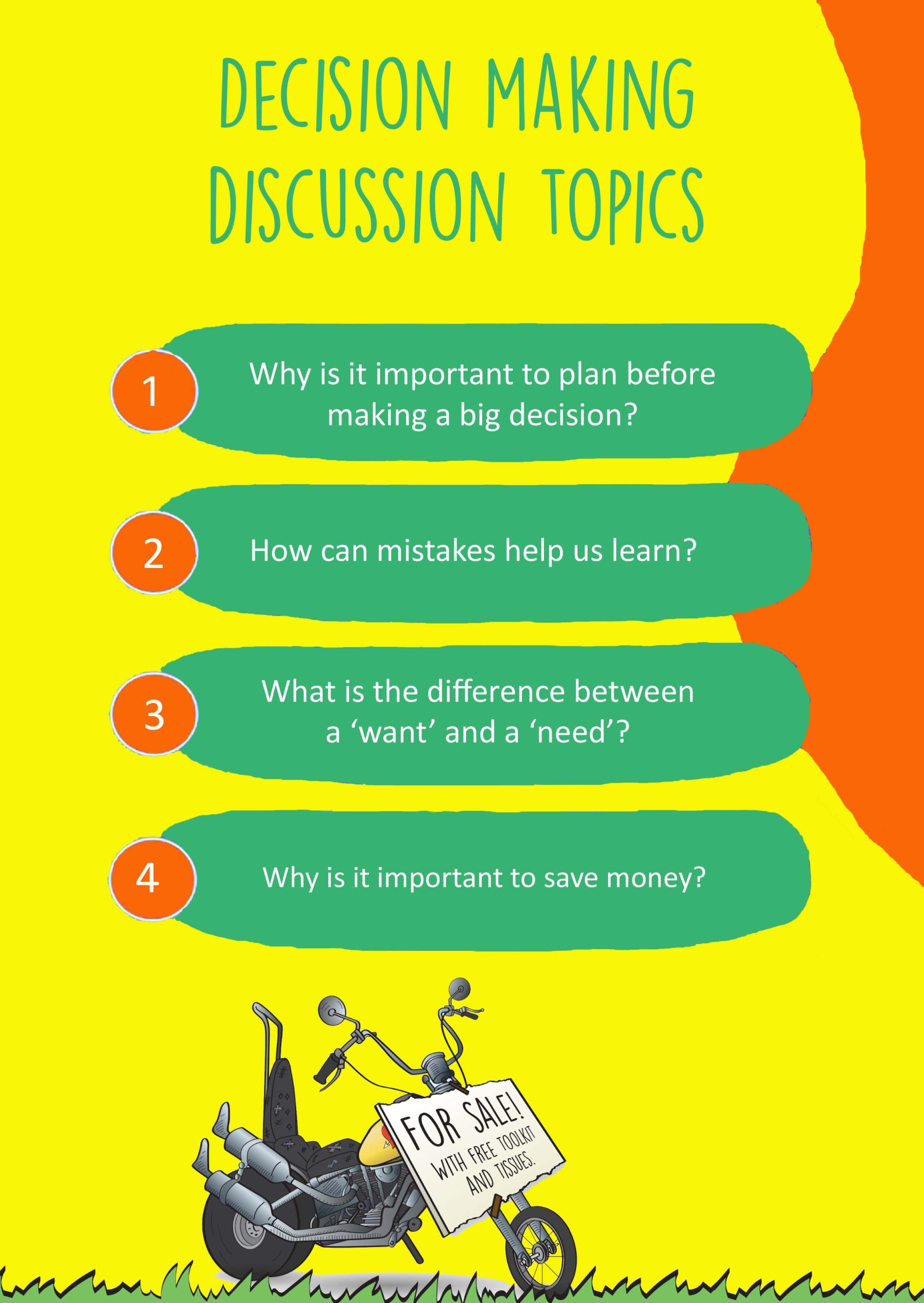
In Spid the Spider is Easy Spider Spid allows his heart to rule his head when making a decision. So we’ve created these ‘decision making discussion topics’ (Q&A) to help parents and teachers start meaningful conversations with children (ages 5–9) about the themes in Spid’s story, and to help them make sound decisions. Use our questions and answers to explore resilience, decision-making, money sense, and learning from mistakes. You can download the discussion topics for free.
Decision making discussion topics
1. Why is it important to plan before making a big decision?
Children often want things straight away, just like Spid wanted his motorbike. But planning helps us make sure we can afford what we want, and that it’s safe and useful. Planning also means fewer surprises later (like costly repairs!).
👉 Key message: Planning ahead saves money, time, and stress.
2. How can mistakes help us learn?
Spid made lots of mistakes — wrong fuel, broken tyres, forgotten brakes! Instead of giving up, he learned what not to do next time. Mistakes are a chance to try again in a better way.
👉 Key message: Mistakes aren’t failures — they are stepping stones to success.
3. What’s the difference between a “want” and a “need”?
Spid wanted a shiny motorbike, but what he really needed was to save his money, eat food, and pay for essentials first. Children can learn that wants are fun extras, but needs are the things we must have to stay healthy and safe.
👉 Key message: Needs come first, wants come later.
There are also different types of needs. The economist Maslow, a human behaviour specialist postulates a hierarchy of needs. In simple terms fundamental basic human needs appear at the bottom of the hierarchy, and these need to be fulfilled before we strive to meet further desires. While Spid thinks he might feel and look good riding a flashy motorbike, more importantly he needs to eat, and also win the love and respect of his girlfriend, Bid.
4. Why is it important to save money?
If Spid had saved more before buying his motorbike, he could have paid for fuel, tyres, and repairs without so much stress. Saving gives us choices and helps us be ready for surprises.
👉 Key message: Saving now gives freedom and security later.
5. How did Spid show resilience in the story?
Even though things went wrong, Spid kept trying. He asked for help, fixed problems, and didn’t give up. Resilience means bouncing back when things don’t go as planned. This is key to developing a ‘growth mindset‘.
👉 Key message: Resilience is about trying again and keeping a positive attitude.
Tips for Using This Guide
-
After reading the story, ask children to share their own experiences of making a choice or mistake.
-
Use real-life examples (like saving for a toy or choosing between snacks) to make the lessons practical.
-
Praise children when they think carefully, save money, or show resilience — just like Spid. Use our ‘think before you buy‘ flowchart to help children plan and think carefully
Download our free to use Decision Making Discussion Topics