What is Kwik Cricket?
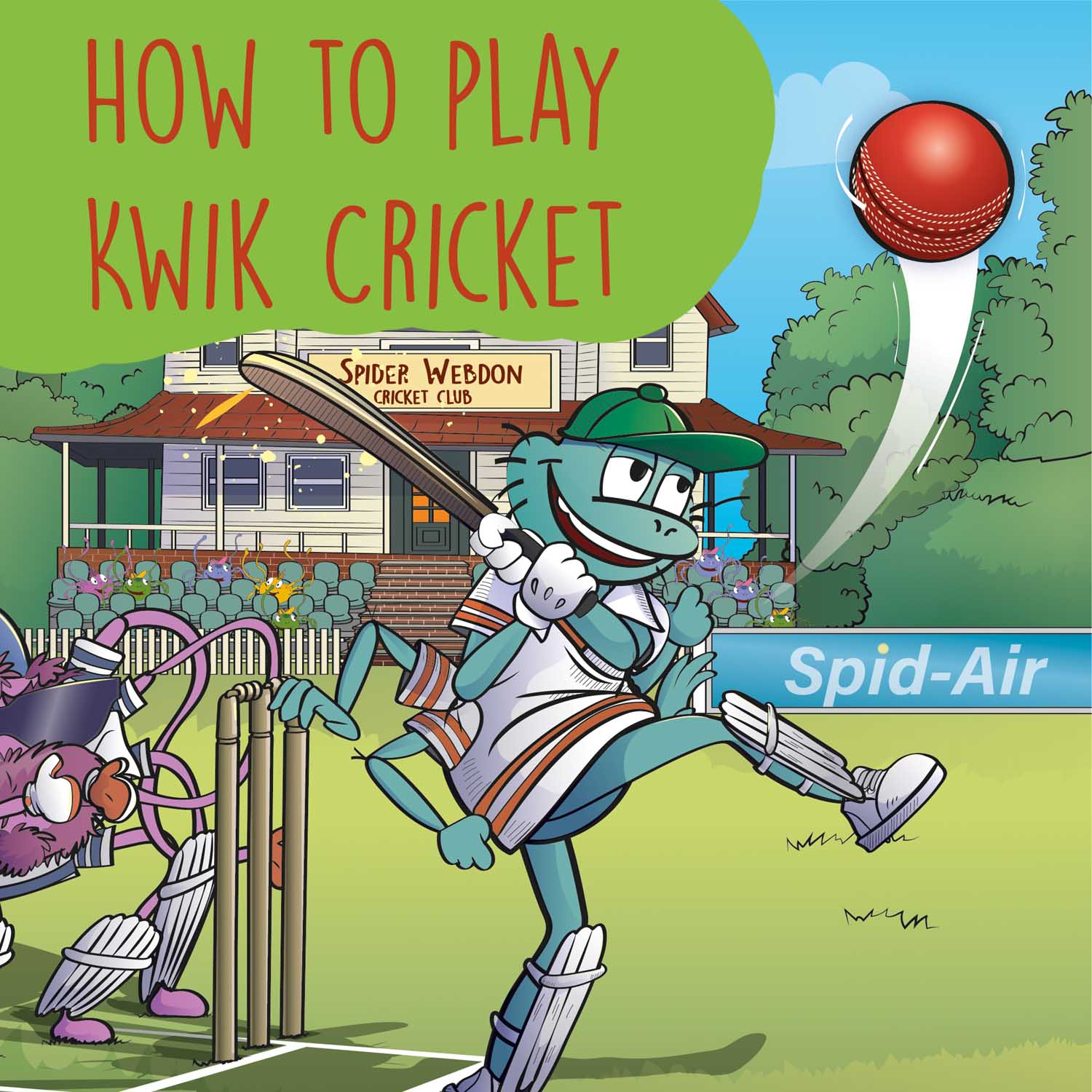
Learn how to play Kwik Cricket – a fun, adapted version of cricket designed for young children and supported by the English Cricket Board. The game involves up to 8-10 players a side, and takes an elapsed time of around an hour to an hour and a half. As well as physical skills, it encourages team-play and bonding, basic mathematics, comprehension and strategy!
What you need to play?
1. A pitch, recommended length 15 yards apart for under 9’s and 17 yards apart for under 11’s
2. Two sets of wickets
3. A plastic bat and ball
3. Teams of up to 8 players a side fielding at a time (though squads can be larger, up to 10 players)
Kwik Cricket Aims
First, to ensure every player gets to bat and bowl :-).
Second, the team that scores the most runs and gets the players on the other side ‘out’ for less runs wins!.
Kwik Cricket Rules
A game or match typically lasts for 16 overs with each side taking turns to bat and bowl for 8 overs. Each over comprises 6 balls.
As in Spid the Spider Challenges for the Cricket Cup, the two captains toss a coin to decide which team bats or fields first.
Batting and scoring
- The batting side is divided into pairs, with each pair batting for two overs. A new pair starts at the end of the second, fourth and sixth overs.
- Each team starts batting with a score of 200 runs, each time a batter is out five runs are deducted and the other batter of the pair faces the next ball.
- Runs are scored by hitting boundaries (6 = for the ball passing boundary without bouncing, 4 = ball passes with bouncing). Also, by running between the wicket (1 run), or through ‘byes’ (batsmen run when the ball passes the keeper)
- Two runs accrue to the batting team for each wide ball and no-ball bowled plus any additional runs taken. However, do not add an extra ball, except in the final over of each innings when, in addition to the two runs, add an extra ball.
Ways to be ‘Out’
- Bowled: The ball hits the wicket.
- Caught: A fielder catches the ball before it hits the ground.
- Run Out: A fielder hits the wicket with the ball while the batter is between runs.
- Stumped: The wicket-keeper hits the wicket while the batter is out of their crease.
- Hit Wicket: The batter accidentally knocks over their own wicket.
- Leg Before Wicket (LBW): This is only applied if the batter deliberately blocks the ball with their leg.
Bowling and Fielding
- Bowling takes place from one end only, eight overs to be bowled by each team, with each player bowling one over.
- Bowling should be over arm where possible.
- All fielders, including the wicket-keeper, must rotate fielding positions at the end of each over.
- Except for the wicket-keeper no fielder may field within 10 yards of the bat.
- For inspiration to set fielding positions, check out our cricket fielding positions challenge
Watch a Video on How to Play Kwik Cricket
Glossary of Terms
- Byes and leg byes – if a batter misses the ball, or if it hits their body, they may still run between the wickets and score.
- Wides – a ball that is too far from the batter to hit it. Scoring: add two runs along with any additional runs run by the batters.
- No Balls – any ball that either bounces more than once before reaching the batter or passes above shoulder height without bouncing. Scoring: add two runs along with any additional runs run by the batters.
Download our guide on how to play Kwik Cricket for Children